5027 S Commerce Dr
Murray, UT 84107

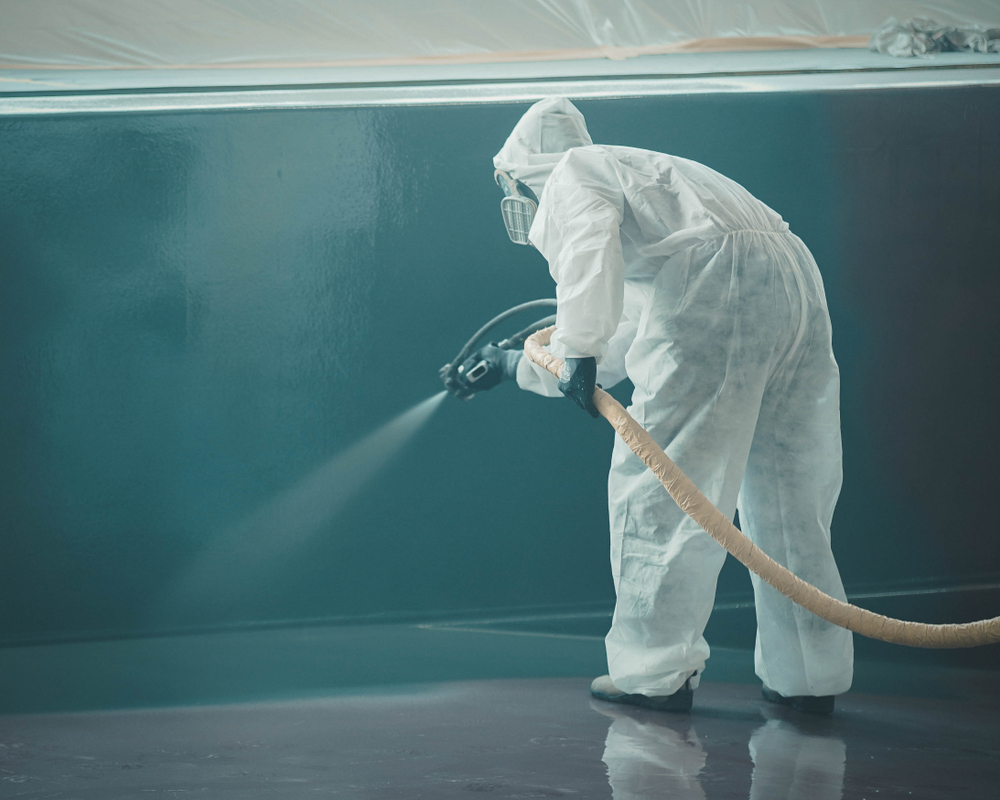
Selecting the right coating for industrial, commercial, or residential applications requires understanding how different technologies perform under various conditions. Among the leading options, polyurea coatings have gained recognition for their rapid curing, durability, and adaptability. Comparing them to traditional epoxy or acrylic coatings highlights why performance requirements should guide your selection.
Intermountain Coatings specializes in applying advanced polyurea coatings in Utah, providing solutions for projects that demand superior protection and long-lasting performance.
Polyurea is a spray-applied elastomeric coating formed by the reaction of an isocyanate component with a resin blend. Its chemical composition allows for rapid curing, exceptional flexibility, and high resistance to chemicals and abrasion. Unlike traditional coatings, polyurea is often 100% solids, VOC-free, and can be applied in thick layers without sagging.
The technology is widely used across industrial flooring, waterproofing, secondary containment, and outdoor structural applications where durability and chemical resistance are essential.
Understanding performance differences is crucial when deciding between polyurea and traditional coatings such as epoxy or acrylic.
Rapid curing of polyurea enables faster project completion, minimizing operational disruptions.
Polyurea exhibits high elasticity, accommodating substrate movement and thermal expansion without cracking. In contrast, epoxies tend to be rigid and may crack under stress, particularly on concrete substrates subject to expansion and contraction. The flexibility of polyurea also makes it suitable for applications on both interior and exterior surfaces.
Polyurea coatings resist abrasion, chemical exposure, and weathering far better than traditional coatings. Acrylics can fade or degrade under UV light, and some epoxies may soften under prolonged chemical exposure. Polyurea maintains structural integrity, extending the lifespan of coated surfaces.
Moisture on substrates can compromise traditional epoxy adhesion, leading to blisters or delamination. Polyurea coatings tolerate high moisture levels during application, making them suitable for damp or challenging environments without sacrificing performance.
| Feature | Polyurea | Epoxy/Acrylic |
|---|---|---|
| Cure Time | Seconds to minutes | Hours to days |
| Flexibility | High | Moderate to low |
| Abrasion Resistance | Excellent | Moderate |
| Chemical Resistance | Excellent | Moderate |
| Moisture Tolerance | High | Low |
| UV Stability | Excellent | Acrylic good, Epoxy poor |
This comparison demonstrates why polyurea coatings are increasingly chosen for applications requiring long-lasting, low-maintenance protection in harsh conditions. While traditional epoxy coatings may have their advantages, they simply cannot withstand the same level of moisture and chemical exposure that polyurea coatings can.
Choosing the appropriate coating technology depends on anticipated performance demands. Polyurea excels where rapid curing, flexibility, and extreme durability are required, while traditional coatings are sufficient for moderate, indoor, or decorative applications.
Selecting a coating based solely on cost or aesthetics can lead to premature failure, increased maintenance, and operational downtime. Instead, project specifications should dictate the choice of coating technology. Considerations include:
Professional coating providers like Intermountain Coatings help assess these factors and apply the correct solution, ensuring surfaces meet long-term performance goals.
For projects in Utah that demand superior durability and minimal downtime, the application of polyurea coating in Utah is often the optimal choice. Its unique combination of speed, flexibility, and resilience makes it suitable for industrial, commercial, and specialized applications where traditional coatings fall short.
Investing in the right coating technology safeguards your surfaces, reduces maintenance costs, and enhances overall operational efficiency. By understanding the performance-based differences between polyurea and traditional coatings, decision-makers can select the most effective solution for their project needs.