5027 S Commerce Dr
Murray, UT 84107

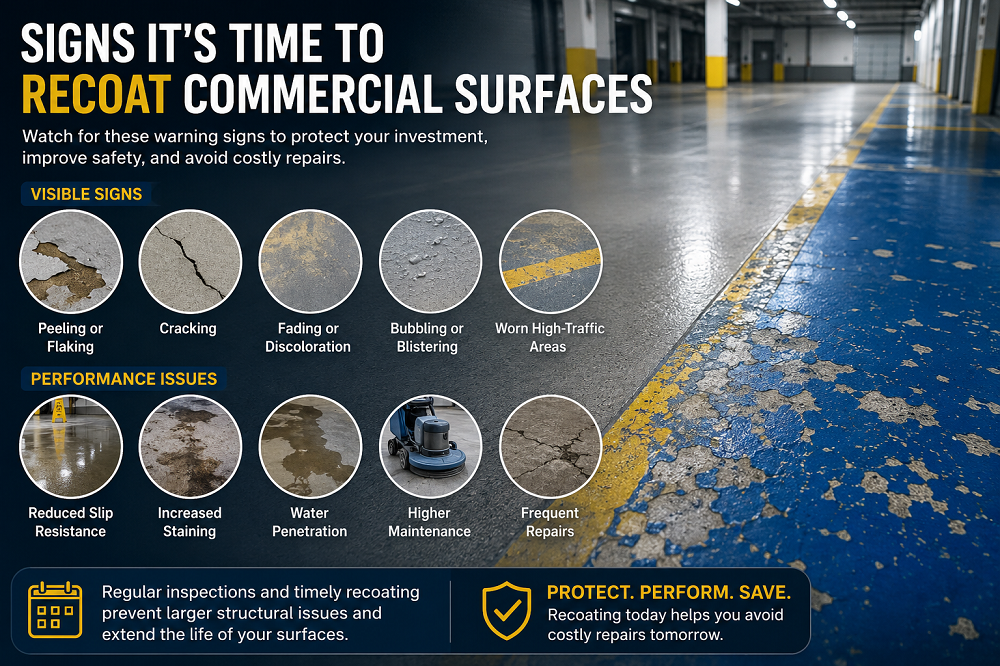
Commercial floors and coated surfaces are designed to withstand heavy traffic, harsh weather, chemicals, and daily wear. However, no coating system lasts forever. Over time, exposure to foot traffic, equipment, moisture, UV rays, and cleaning chemicals gradually reduces its effectiveness. Ignoring the warning signs of coating failure can lead to costly repairs, safety hazards, and even structural damage.
Knowing when to invest in commercial surface recoating helps property owners protect their facilities while avoiding unnecessary replacement costs. By recognizing early indicators and scheduling maintenance at the right time, businesses can extend the life of their surfaces and maintain a professional appearance.
If you're responsible for a commercial surface in Salt Lake City, understanding these warning signs can help you determine when recoating is the most cost-effective solution.
One of the easiest ways to determine whether a commercial surface needs attention is through regular visual inspections. As protective coatings age, they begin to show clear signs of wear that indicate they are no longer providing optimal protection.
Peeling is one of the most obvious indicators that a coating has reached the end of its service life. Sections of the coating begin separating from the underlying substrate, exposing concrete or other materials beneath.
Delamination often occurs because of:
Once peeling begins, the exposed surface becomes vulnerable to further deterioration, making commercial surface recoating an important next step.
Small cracks in a coating may seem harmless, but they create pathways for water, chemicals, and contaminants to reach the substrate. As these cracks expand, they reduce the coating's ability to protect the surface.
Routine inspections can identify cracking early, allowing recoating before extensive damage develops.
Constant UV exposure, weather conditions, and heavy use gradually cause coatings to fade or lose their original finish. While fading is often considered a cosmetic issue, it can also indicate that the coating is breaking down and becoming less effective.
A fresh recoating restores both appearance and performance.
Bubbles or blisters typically indicate trapped moisture or loss of adhesion beneath the coating. Left untreated, these areas can rupture and expose the underlying material to further damage.
Commercial facilities rarely wear evenly. Entrances, loading zones, walkways, and workstations often show visible wear before other areas.
If coating thickness has noticeably diminished or bare substrate is visible, recoating should be scheduled before deterioration spreads.
Not every coating failure is immediately visible. In many cases, performance changes provide the first indication that protection has diminished.
Many commercial coatings include textured finishes that improve traction. As coatings wear, these textures gradually smooth out, increasing the risk of slips and falls.
Reduced slip resistance is particularly concerning in:
Restoring traction through commercial surface recoating improves safety while helping facilities maintain safer walking surfaces.
High-quality coatings create a protective barrier that resists oils, chemicals, dirt, and other contaminants. As coatings deteriorate, stains become more difficult to remove because liquids begin penetrating the surface.
Persistent staining often indicates that the coating is no longer performing as intended.
Water should remain on the surface of a properly functioning coating rather than soaking into the substrate. If moisture begins penetrating the surface, it can contribute to:
Addressing water intrusion early helps prevent much more extensive structural repairs.
Another common sign that recoating is needed is a noticeable increase in maintenance expenses.
Older coatings often require:
Rather than continuing to spend money on temporary fixes, investing in commercial surface recoating often provides better long-term value by restoring the protective system and reducing ongoing maintenance needs.
Many businesses find that scheduled recoating is significantly less expensive than waiting until complete replacement becomes necessary.
Routine inspections are one of the most effective ways to maximize the lifespan of commercial coating systems.
Facility managers should periodically evaluate surfaces for:
Identifying these issues early allows property owners to plan maintenance before coatings fail completely.
Professional inspections also help determine whether localized repairs are sufficient or whether complete recoating will provide the greatest long-term benefit.
Recoating involves more than a new finish; it requires thorough surface preparation, repairing damage, and choosing the right system for your environment. Experts clean the substrate, remove old coatings, and fix imperfections to ensure maximum adhesion.
Intermountain Coatings specializes in high-performance commercial recoating that maximizes durability while minimizing maintenance.
Protective coatings are an investment in the longevity, appearance, and safety of commercial properties. When signs such as peeling, cracking, fading, bubbling, staining, water penetration, or reduced slip resistance begin to appear, it's time to consider commercial surface recoating before more serious damage develops.
Timely recoating restores protection, reduces maintenance costs, and helps extend the service life of concrete and other commercial surfaces. Regular inspections combined with professional maintenance ensure facilities remain attractive, functional, and safe for employees and visitors alike.